George Mason University Antonin Scalia Law School

(Patented) Life Begins at Forty: CPIP Celebrates the Ongoing Legacy of Diamond v. Chakrabarty

The following post comes from Colin Kreutzer, a rising 2E at Scalia Law and a Research Assistant at CPIP.
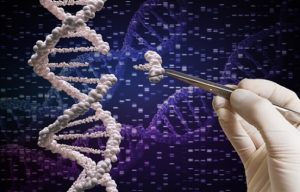
gloved hand assembling or dissembling a model of DNABy Colin Kreutzer

It’s been forty years since the Supreme Court ruled in favor of patentability for a GE scientist and the oil-eating bacterium he’d created, greatly expanding the scope of living matter that was eligible to be patented. Read more

Recent Developments in the Life Sciences: The Continuing Assault on Innovation by Antitrust Plaintiffs in Lantus

By Erika Lietzan

dictionary entry for the word "innovate"In February, the U.S. Court of Appeals for the First Circuit held, in a direct purchaser antitrust action, that an innovative pharmaceutical company marketing an injectable drug product had “improperly listed” in FDA’s Orange Book a patent claiming a mechanism used in the drug’s delivery device. Read more

IP Industries Step Up in This Time of Crisis

the word "inspiration" typed on a typewriterThe global COVID-19 pandemic has challenged multiple aspects of modern society in a short time. Health and public safety, education, commerce, research, arts, and even basic government functions have had to change dramatically in the space of a couple months. Some good news in all this is the response of many companies in the intellectual property (IP) industries: they are stepping up to make sure crucial information and materials are available to speed research and development (R&D) towards vaccines, therapeutics, and medical devices. Read more

New CPIP Policy Brief: Barnett on the End of Patent Groupthink

a hand reaching for a shining key hanging among dull keysIn a new CPIP policy brief entitled The End of Patent Groupthink, CPIP Senior Fellow for Innovation Policy Jonathan Barnett highlights some cracks that have emerged in the recent policy consensus that the U.S. patent system is “broken” and it is necessary to “fix” it. Read more

“No Combination Drug Patents Act” Stalls, but Threats to Innovation Remain

superimposed images from a chemistry labBy Kevin Madigan & Sean O’Connor

This week, the Senate Judiciary Committee was to mark up a bill limiting patent eligibility for combination drug patents—new forms, uses, and administrations of FDA approved medicines. While the impetus was to curb so-called “evergreening” of drug patents, the effect would have been to stifle life-saving therapeutic innovations. Read more

Empirical Study Confirms Positive Relationship Among Patents, Technological Progress, and Societal Benefit

dictionary entry for the word "innovate"We “stand on the shoulder of giants,” goes the famous adage. In a groundbreaking new law review article, Does Patented Information Promote the Progress of Technology?, Cardozo Law’s Jonathan H. Ashtor examines the relationship among patents, information theory, and their corresponding benefits to society and technology. Read more

New “Invalidated” Documentary Highlights the Problems With the PTAB: Free Screening on October 26

a lit lightbulb hanging next to unlit bulbsBy Devlin Hartline and Aditi Kulkarni*

The “Invalidated” documentary will be screened this Friday, October 26, at 5:30 PM in Washington, D.C. To register for this free event, which features a presentation by Bunch O Balloons inventor Josh Malone among others, please click here. Read more

Statement of Professor Adam Mossoff on Oil States v. Greene’s Energy

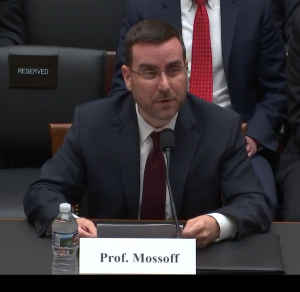
Adam MossoffThe statement below is from Professor Adam Mossoff, whose law review articles (here and here) were heavily cited in Justice Gorsuch’s dissent (joined by Chief Justice Roberts) in today’s opinion in Oil States v. Greene’s Energy.

Adam Mossoff
Professor of Law
Antonin Scalia Law School, George Mason University

For the first time, the Supreme Court holds that patents for new inventions are regulatory grants similar to monopoly grants for bridges or toll roads. Read more

CPIP Scholars Ask Federal Circuit to Fix Patent Eligibility Doctrine in Cleveland Clinic Appeal

files labeled as "patents"Last week, a group of CPIP scholars filed an amicus brief in Cleveland Clinic Foundation v. True Health Diagnostics, a case currently on appeal to the U.S. Court of Appeals for the Federal Circuit. The patents at issue cover diagnostic tests used to assess a person’s risk of developing cardiovascular disease. Read more