 On March 24, the Internet Archive (Archive) unveiled what it called the “National Emergency Library” (NEL) in order to “address our unprecedented global and immediate need for access to reading and research materials.” The announcement specified that Archive would suspend the waitlist for 1.4 million books in its unlicensed “lending library” until at least June 30, thus allowing an unlimited number of people to download electronic copies of the same book at the same time. Read more
Category: Copyright
Senate IP Subcommittee Hearing on DMCA Exposes Notice-and-Takedown Problems for Artists and Authors
The following post comes from Yumi Oda, an LLM Candidate at Scalia Law and a Research Assistant at CPIP.
 By Yumi Oda
On June 2, the Senate Subcommittee on Intellectual Property held a virtual online hearing entitled Is the DMCA’s Notice-and-Takedown System Working in the 21st Century? Read more
Senator Ron Wyden, Stop Harming Independent Creators
 Here’s a brief excerpt of a post by CPIP Senior Scholar Eric Priest and Professor Sean Pager that was published at IPWatchdog:
As the current pandemic eviscerates jobs throughout our economy, Congress has a rare opportunity to improve the lot of one long-besieged group of workers: creators. Read more
The AM-FM Bill and the Status of Terrestrial Music Broadcast Performance Rights
The following post comes from David Ward, a rising 2L at Scalia Law who is working as a Research Assistant this summer at CPIP.
By David Ward
This past Wednesday, the Senate Intellectual Property Subcommittee, led by its Chairman, Senator Thom Tillis (R-NC), held a virtual online briefing on the current state of music rights. Read more
Scalia Law Students and CPIP Scholars Make an Impact in Copyright Office Section 512 Study
The U.S. Copyright Office released its long-awaited report on Section 512 of Title 17 late last week. The Report is the culmination of more than four years of study by the Office of the safe harbor provisions for online service provider (OSP) liability in the Digital Millennium Copyright Act of 1998 (DMCA). Read more
IP Scholars File Comments with OSTP on Public Access to Scholarly Publications
 A group of intellectual property scholars filed comments yesterday with the Office of Science and Technology Policy (OSTP), asking it to forgo its plans to make all federally-funded scholarly publications free and open to the public upon initial publication. The comments were submitted in response to a notice of Request for Information (RFI) that was published in the Federal Register seeking recommendations “on approaches for ensuring broad public access to the peer-reviewed scholarly publications, data, and code that result from federally funded scientific research.” Read more
Copyright Notebook: Observations on Copyright in the Time of COVID-19
 The Indomitable Spirit of Artists
Heroes are everywhere. We all give thanks for the selfless efforts of medical professionals, first responders, delivery drivers, gig economy workers, grocery and pharmacy staff, and the many other individuals who daily place themselves at the center of the coronavirus pandemic in order to make our quarantined lives safe and manageable. Read more
IP Industries Step Up in This Time of Crisis
 The global COVID-19 pandemic has challenged multiple aspects of modern society in a short time. Health and public safety, education, commerce, research, arts, and even basic government functions have had to change dramatically in the space of a couple months. Some good news in all this is the response of many companies in the intellectual property (IP) industries: they are stepping up to make sure crucial information and materials are available to speed research and development (R&D) towards vaccines, therapeutics, and medical devices. Read more
Supreme Court Paves Way for Revoking State Sovereign Immunity for Copyright Infringement
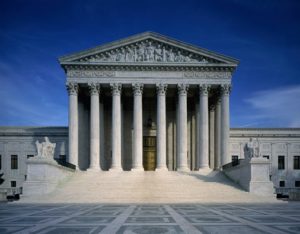 Last week, the Supreme Court handed down its unanimous judgment in Allen v. Cooper, a copyright case involving both actual and metaphorical pirates. The actual pirate was Edward Teach, better known as Blackbeard, who captured a French ship in the Indies, renamed it Queen Anne’s Revenge, used it for piracy, and then later ran it aground near the North Carolina coast in 1718. Read more
Proposed Open Access Regulation is a Solution in Search of a Problem
 Earlier this week, a coalition of over 125 publishers and non-profit scientific societies joined the Association of American Publishers (AAP) in a letter to the White House expressing serious concerns with a proposed Administration policy that would override intellectual property rights and threaten the advancement of scientific scholarship and innovation. Read more