We’ve all heard the narrative about patent licensing firms, often referred to pejoratively as “patent trolls.” These patent owners, who choose to license their innovations rather than build them, are the supposed poster-children of a “broken” patent system. It’s as if commercializing one’s property, just like a landlord leases his land for another to use, is suddenly a bad thing. Read more
Blog
The One Year Anniversary: The Aftermath of #AliceStorm
The following post, by Robert R. Sachs, first appeared on the Bilski Blog, and it is reposted here with permission.
 It’s been one year since the Supreme Court’s decision in Alice Corp. v. CLS Bank. On its face the opinion was relatively conservative, cautioning courts to “tread carefully” before invalidating patents, and emphasizing that the primary concern was to avoid preemption of “fundamental building blocks” of human ingenuity. Read more
Federal Circuit Threatens Innovation: Dissecting the Ariosa v. Sequenom Opinion
By Patent Publius
Earlier this month, the Federal Circuit issued its opinion in Ariosa v. Sequenom, a closely-watched biotechnology case with significant repercussions for patent-eligibility analysis generally. Unfortunately, the Federal Circuit misapplies the Supreme Court’s analytical framework from Mayo v. Read more
Supreme Court Recognizes that Patents are Property
By Adam Mossoff
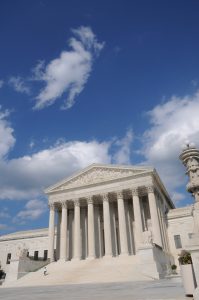 In an important decision handed down today, the Supreme Court explicitly recognized that patents are property secured by the Fifth Amendment Takings Clause. In Horne v. Department of Agriculture, the Court held that the Takings Clause imposes a “categorical duty” on the government to pay just compensation whether it takes personal or real property. Read more
Unintended Consequences of “Patent Reform”: The Customer Suit Exception
 In the last two weeks, the House and Senate Judiciary Committees marked up wide-ranging patent legislation ostensibly aimed at combating frivolous litigation by so-called “patent trolls.” But while the stated purpose of the House and Senate bills—H.R. 9 (the “Innovation Act”) and S. Read more
CloudFlare Enjoined From Aiding Infringers: Internet Unbroken
Just how far does a court’s power to enjoin reach into cyberspace? It’s clear enough that those directly posting or hosting infringing content are subject to an injunction. But what about a company such as CloudFlare that provides content delivery network and domain name server services? Read more
The Commercial Value of Software Patents in the High-Tech Industry
In CPIP’s newest policy brief, Professor Saurabh Vishnubhakat examines the important role patents play in commercializing software innovation and supporting technology markets. He explains how a proper understanding of this commercial role requires a broader view of patents in software innovation than the all-too-common focus on a small handful of litigated patents and legal questions of patentability and patent quality. Read more
Copyright’s Republic: Promoting an Independent and Professional Class of Creators and Creative Businesses
By Mark Schultz and Devlin Hartline
The following essay is the first in a series of CPIP essays celebrating the 225th anniversary of the Copyright Act by recognizing the rich purposes, benefits, and contributions of copyright. This series of essays will be published together in a forthcoming collection entitled “Copyright’s Republic: Copyright for the Last and the Next 225 Years.” Read more
Copyright’s Republic: Copyright for the Last and the Next 225 Years
By Mark Schultz and Devlin Hartline
This past Sunday marked the 225th anniversary of the first U.S. Copyright Act. As we move well into the twenty-first century, a claim that copyright no longer “works” in the “digital age” has become commonplace – so commonplace, in fact, that it’s arguably the dominant cliché in modern copyright discussions. Read more
CPIP Supports Guidelines for the Protection of Fundamental IP Rights
February 2, 2015
The Center for the Protection of Intellectual Property (CPIP) is proud to join today’s open letter to Congress providing a set of guidelines for considering laws and regulations governing intellectual property.
The letter outlines some of the fundamental economic and moral considerations that underscore the benefits of strong intellectual property rights. Read more